Krastova gora
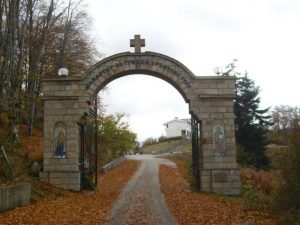
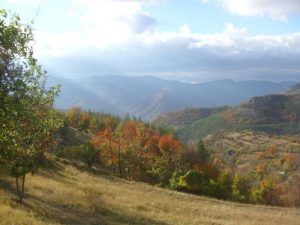
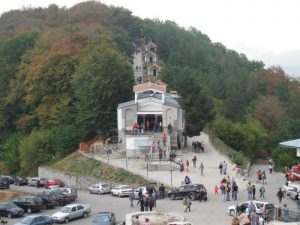
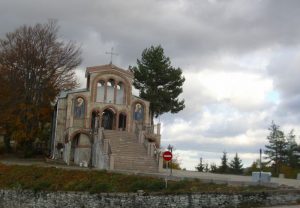
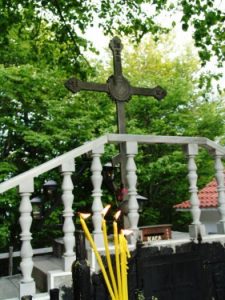
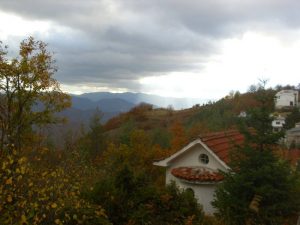
Wellkome to “Varnentsi” Family Hotel – village BorovoThe Cross Forest is one of the biggest Bulgarian Orthodox sanctuaries, which although continues to rase questions and discussions,is a place where God abundantly transmits His grace. From decades, fathers have passed to their sons the story of the medicative wonders of the cross built on the hill above the Borovo village, where many have found solace, healed and glorified God. If we take a closer look at the history documents, we will find out that even the Byzantines chroniclers had named the Rhodopes “Magna silva bulgarika – The holy Bulgarian forest”. That definition refers in the best way for Cross forest, raising as high as 1545 meters above sea level in the thick of beautiful wood and ridges.
Here at Cross forest, the believer can value fittingly, everything that the Bulgarian Orthodox church had done throughout the times of rise and fall, so the acts of the faith could stay alive and active. And if at certain times there was disturbance in the faith that happened because God let it happened, so he can put on test the strength of the Christian spirit. That never ending faith has brought today even you, from the different parts of our Motherland so you can drink of the holy waters of Christ’s wise words and taste the fruits of the hope and love impregnated by the wisdom of the Gospel, to re-think the words: “Here on Earth, man is a tired traveller, who has stopped to spend the night, for we don’t have here an enduring city, but we seek that which is to come” /Hebrews 13:14/
The great steward of the Byzantine Empire, the Georgian Gregory Bakuriani founded in 1083 the Bachkovo monastery, endowed it with vast land property, populated it with 50 monks from Georgia and made up a monastery law. At that time Bulgaria was under Byzantines authority /1018-1185/. A theologian school was founded within the monastery and notable Georgian teachers like Joan Petritzi, Ikal-toeli, Arsen and many others taught there. And in the “To the sacred treasures and honest holy icons” Bakuriani wrote: “I gave the monastery two icons made of golden alloy and parts of the holy Christ’s cross. The bigger icon was called “Holy transfiguration of God” and the smaller one “Holy Virgin”.
The monastery law forbids married Georgians to live in the monastery. For the multitude of the servants, it has been said, that a village called “Ivertze” was built. This settlement, surrounded by wide fertile lands, forests and meadows abundant in pastures, turned into a rich agriculture and stock-breeding place. Numerous herds of the monastery pastured around the picturesque place “Cross forest”, known also as “Gradishte”, that looked like in the shape of a cross. Right here were the monastery dairy farms and big housings with the church “Holy Trinity”.
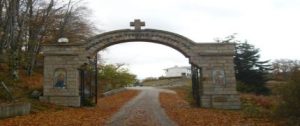
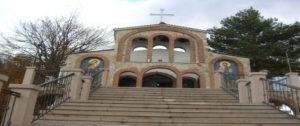
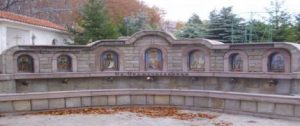
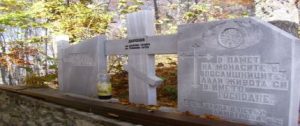
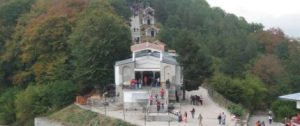
Till the end of XII-th century the monk brotherhoods of the Bachkovo and Troitzki monasteries were supported mostly by new Georgian recruitments. When Bulgaria fell under the Ottoman yoke in 1393 at the Bachkovo monastery came in power the Greek despotism and what Bakuriani were afraid of the most had happened: the Greeks chased away the last Georgian monks, destroyed the magnificent tomb of the brothers Gregory and Abasiy Bakuriani in the main temple and managed to wipe out everything connected with the Ivertze village. Restless days and dark times had come to that part of the Rhodope mountain in the beginning of XV-th century when along the current of river Chaia and the Lacki gorge suddenly were rushed by the numerous hordes of Dzhadit Ali Pasha. They plundered, brought dishonour and slaughtered all over the place. In a hurry, the frightened monks of Cross forest buried into the ground the precious icon along with the remains of the Christ’s cross and other valuables.
The monks were slaughtered, the church and the buildings were robbed, violated and burned down, the herds were taken away by the invaders. In the villages nearby such as Dryanovo, Telitza, Mostovo, Dzhurkovo etc, the Pasha who brought with himself imams, left some of them with a task to turn the natives into muslims by force. The Bulgarian Mohammedans in these villages however kept their language and customs, their Bulgarian folk songs and legends, they continued to come to Cross forest for the “Holy Trinity” and to make a sacrificial rite, and to participate in liturgy for Cross day.
In 1933 the prophet Jordan Stoichev Drenkov came to the Rhodope region, he taught the Christians how to understand the word of God and to live wisely. He had the gift to find holy places and when he came to the Borovo village, and heard about a place called “the Cross” by the natives, he went to visit it. With God’s help, brother Yordancho (as the Rhodopean Christians called him), found on this place unusual power radiating from the bowels of the earth beneath the hill, as well relics from a large monastery. He began to send ill people to spend the night there, who through faith and God’s blessing got healed.